Fictional scam example · 2 of 6
The small delivery fee
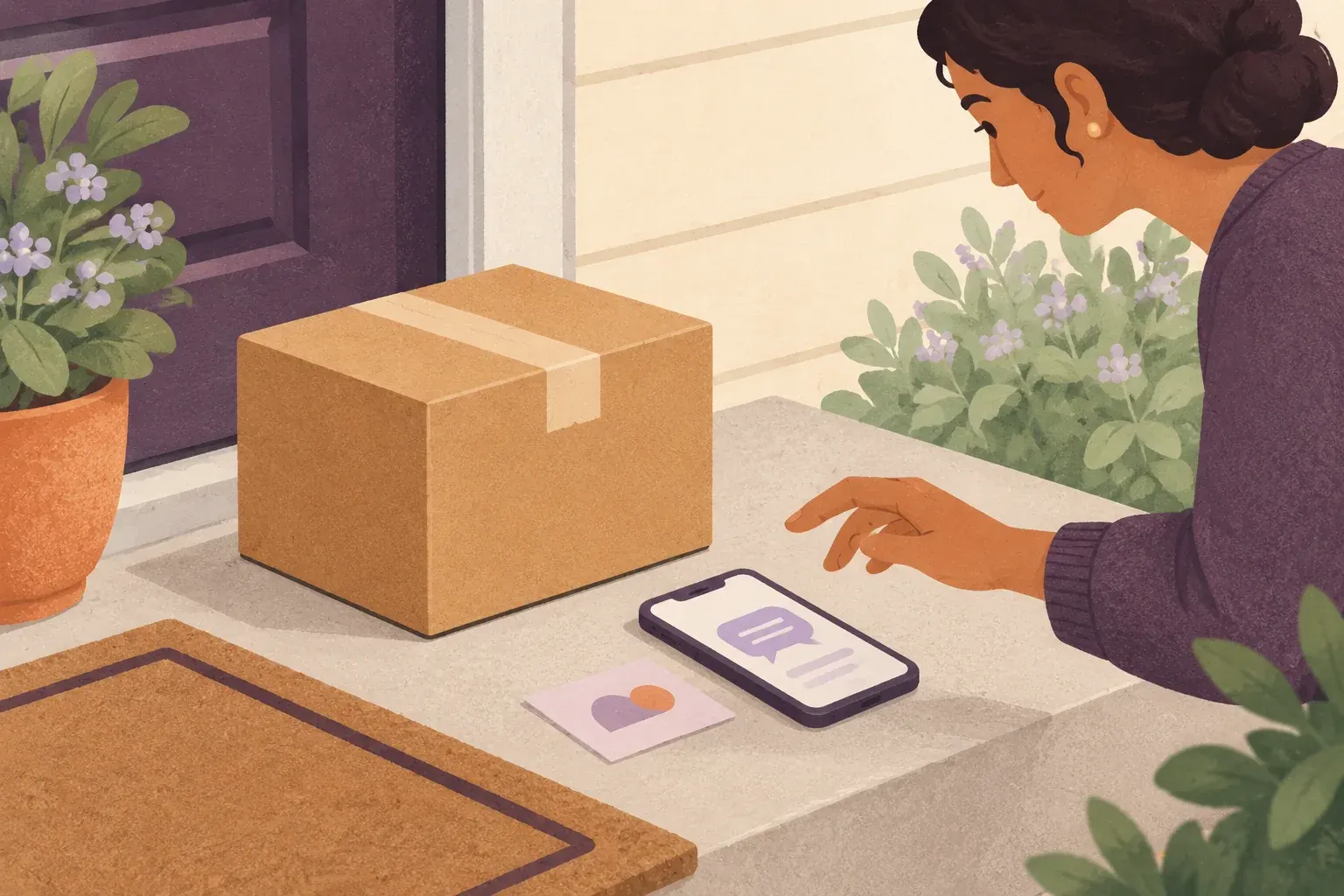
A tiny payment request can lead to a fake card-payment page.
Read the example
What would make you pause? Open each explanation, then compare your next step.
Three things to notice
1. An unexpected payment
A small amount can make the request feel low-risk. What matters is where it sends you and what it asks you to share.
2. A deadline to create pressure
A threatened return nudges you to act before checking.
3. The message supplies the route
A payment link inside the message is not independent verification. No real link is included in this practice example.
A safer next step
If you expect a parcel, open the retailer’s or carrier’s official app or website yourself and check using your existing order details. Do not enter card details through the unexpected message.
These clues are not a definitive scam test. Some fraudulent messages are polished and have no obvious errors.
Sources & review
Source check: October 5, 2026. These links go to the original publishers; listing a source is not an endorsement. Safety and reporting guidance follows these official Canadian pages. Confirm current details there before acting.
- Get Cyber Safe — Phishing: Don't get reeled in - Get Cyber Safe
- Get Cyber Safe — Phones and tablets - Get Cyber Safe